

Paris, the capital of France, is a living museum where architecture tells the story of the city’s fascinating evolution. With its historic buildings and a wide range of architectural styles, the city has managed to preserve its charm while embracing modernity. From Haussmannian architecture to modern skyscrapers, each era has left its mark on the Parisian skyline. This article explores the most iconic Parisian architecture styles, highlighting the historic buildings in Paris that define the city’s unique character.
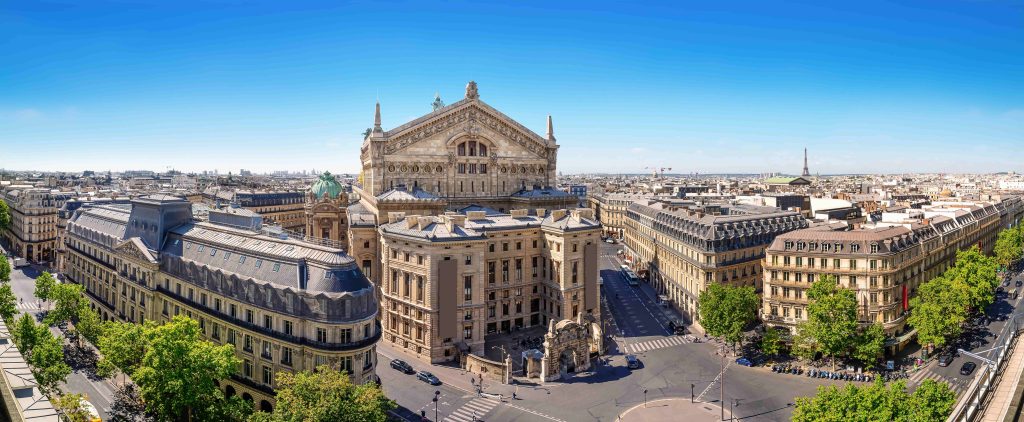
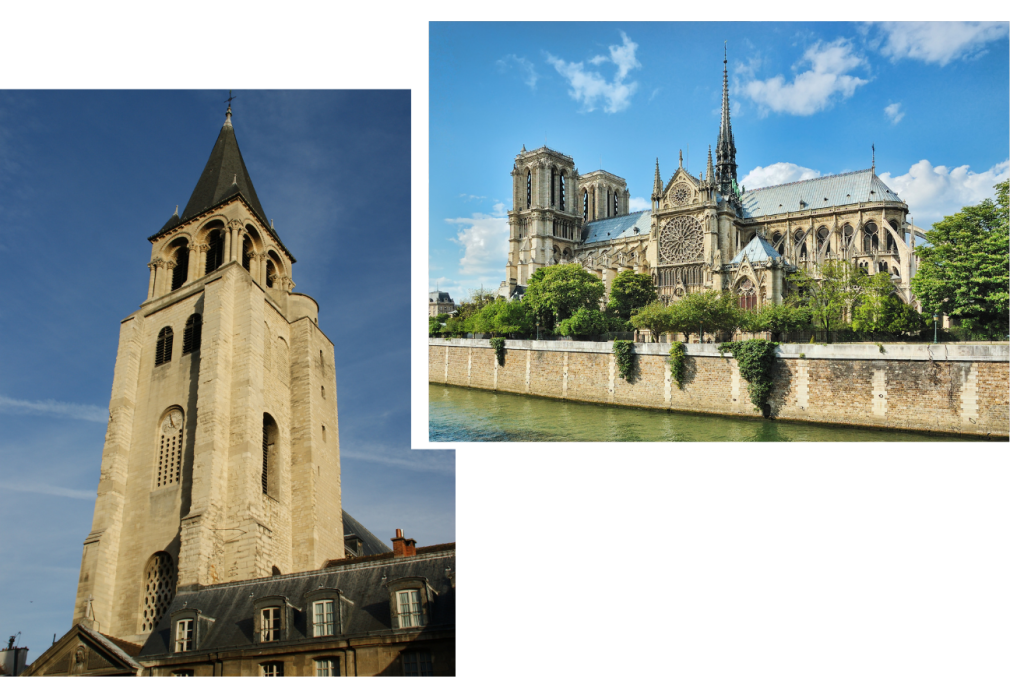
Romanesque architecture, which flourished during the early Middle Ages, is characterized by thick walls, round arches, and large towers. Although few Romanesque buildings remain in Paris, the Saint-Germain-des-Prés Church stands as a striking example of this style. The Sacré-Cœur Basilica, although primarily Romano-Byzantine, also incorporates strong Romanesque influences in its design, demonstrating the evolution of architectural styles through the ages.
In the 12th century, Gothic architecture emerged, introducing pointed arches, flying buttresses, and stunning stained-glass windows. The Notre-Dame Cathedral is the quintessential example of Gothic architecture in Paris, with its soaring towers and intricately detailed façade. Another masterpiece of Gothic architecture in Paris is the Sainte-Chapelle, renowned for its exquisite stained-glass windows that bathe the interior in vibrant colors.
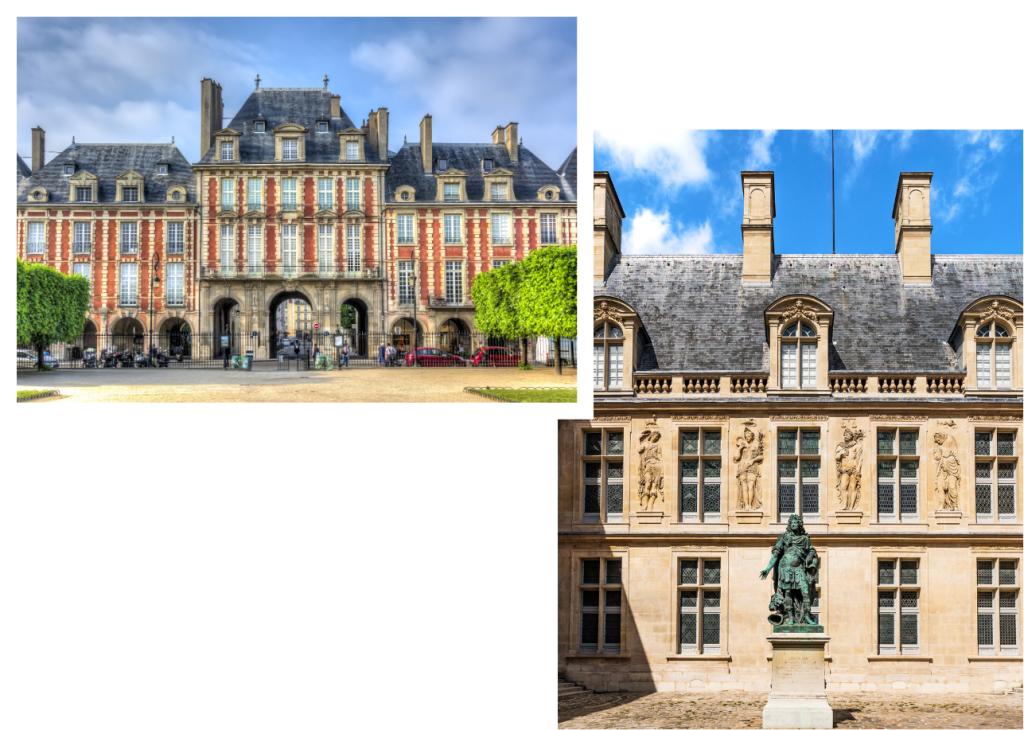
The Renaissance period marked a shift toward harmony, proportion, and the use of classical elements in architecture. While Renaissance buildings in Paris are fewer than in other European cities, several notable examples can still be admired:
– Place des Vosges (in the Marais district): A perfect example of Renaissance architecture in Paris, with symmetrical façades, red-brick exteriors, and slate roofs.
– Hôtel Carnavalet: One of the oldest mansions in the Marais, this building epitomizes the elegance and balance typical of Renaissance architecture in Paris.
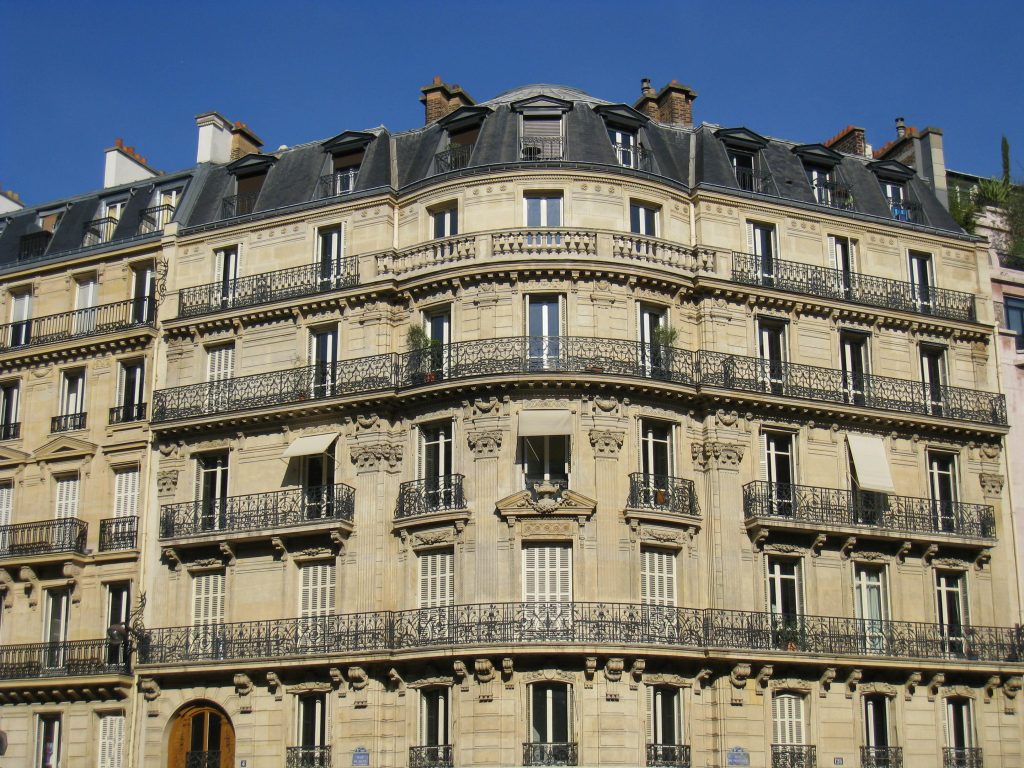
In the 19th century, Haussmannian architecture transformed the city under the direction of Napoleon III and city planner Georges-Eugène Haussmann. Haussmann’s redesign created a modern Paris with several distinctive features that have become synonymous with Parisian architecture:
– Wide boulevards to reduce congestion
– Stone-facade buildings, usually five to six stories high
– Wrought-iron balconies, often wrapping around the second floor
– Uniform rooftops, bringing harmony to the cityscape
While some lamented the loss of medieval streets, Haussmannian architecture ultimately created the iconic Paris we know today, blending function with beauty.
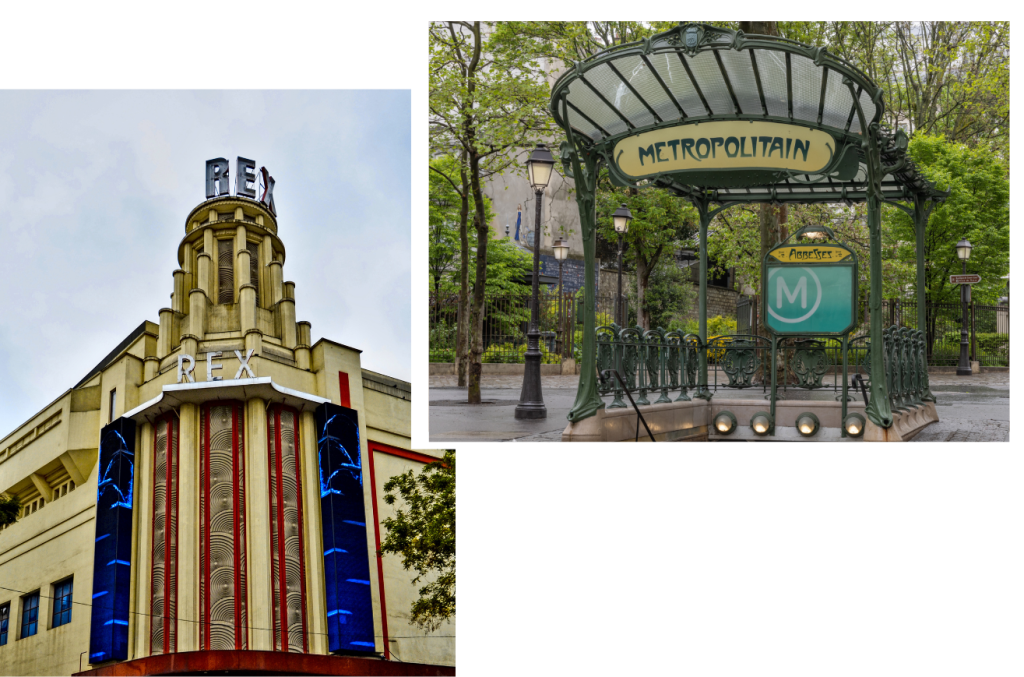
The Art Nouveau style (1880s–1910s) was inspired by natural forms and is characterized by flowing lines, organic shapes, and intricate details. Some of the most notable examples of Art Nouveau in Paris include:
– Paris Metro Entrances: Designed by Hector Guimard, these entrances mimic vines growing from the ground, symbolizing the harmonious blend of nature and urban life.
– Galeries Lafayette: A Haussmannian structure enhanced with a stunning Art Nouveau stained-glass dome by Jacques Grüber, this department store is an iconic fusion of historical architecture and artistic innovation.
Following Art Nouveau, the Art Deco movement (1910s–1930s) embraced geometric shapes, clean lines, and bold designs. Some of the finest examples of Art Deco architecture in Paris include:
– Grand Rex Cinema: A prime Art Deco landmark with an illuminated façade, it stands as a testament to the grandeur of this architectural style.
– Palais de Chaillot: Situated at Trocadéro, this building represents the sleek, modern design elements of Art Deco architecture in Paris.
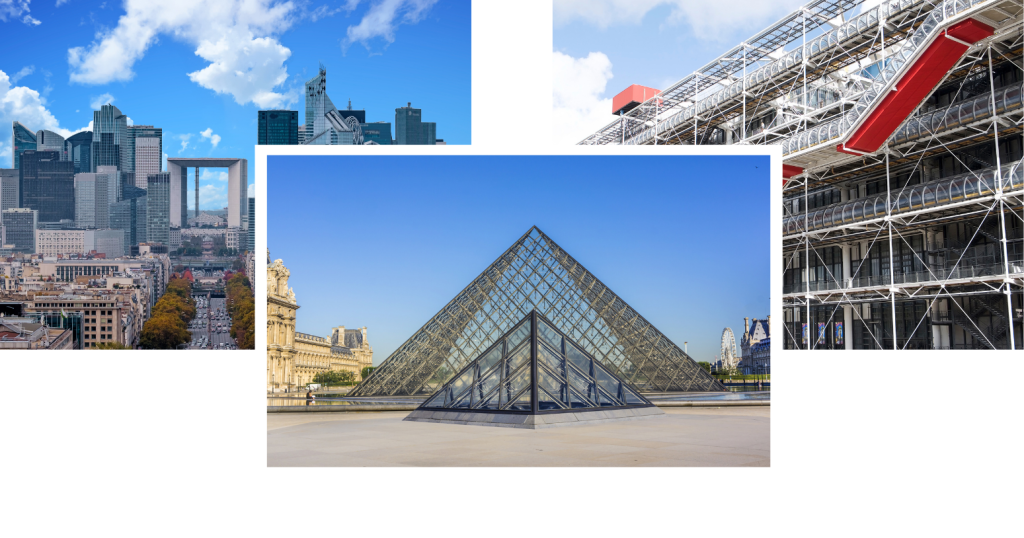
Although Paris is renowned for its historic architecture, modern designs have also found their place in the city. Some striking examples of modern architecture in Paris include:
– Louvre Pyramid: A contemporary glass-and-steel addition to the historic Louvre Palace, this pyramid creates a dramatic contrast with the Renaissance buildings in Paris.
– Centre Pompidou: A bold, industrial-style museum with an exposed structural framework, the Centre Pompidou is a prime example of modern architecture in Paris.
– La Défense: The financial district of Paris is home to cutting-edge designs, offering a futuristic view of Parisian architecture.
Paris is a dynamic blend of architectural styles, each one leaving its mark on the city. From the towering Gothic architecture of Notre-Dame to the elegant Haussmannian boulevards, the organic beauty of Art Nouveau, and the boldness of modern structures, architecture in Paris offers an endless source of inspiration. Whether you’re exploring the Medieval architecture in Paris, admiring the Art Deco buildings in Paris, or marveling at the Renaissance buildings in Paris, every corner of the city invites discovery and appreciation for its rich architectural heritage.